
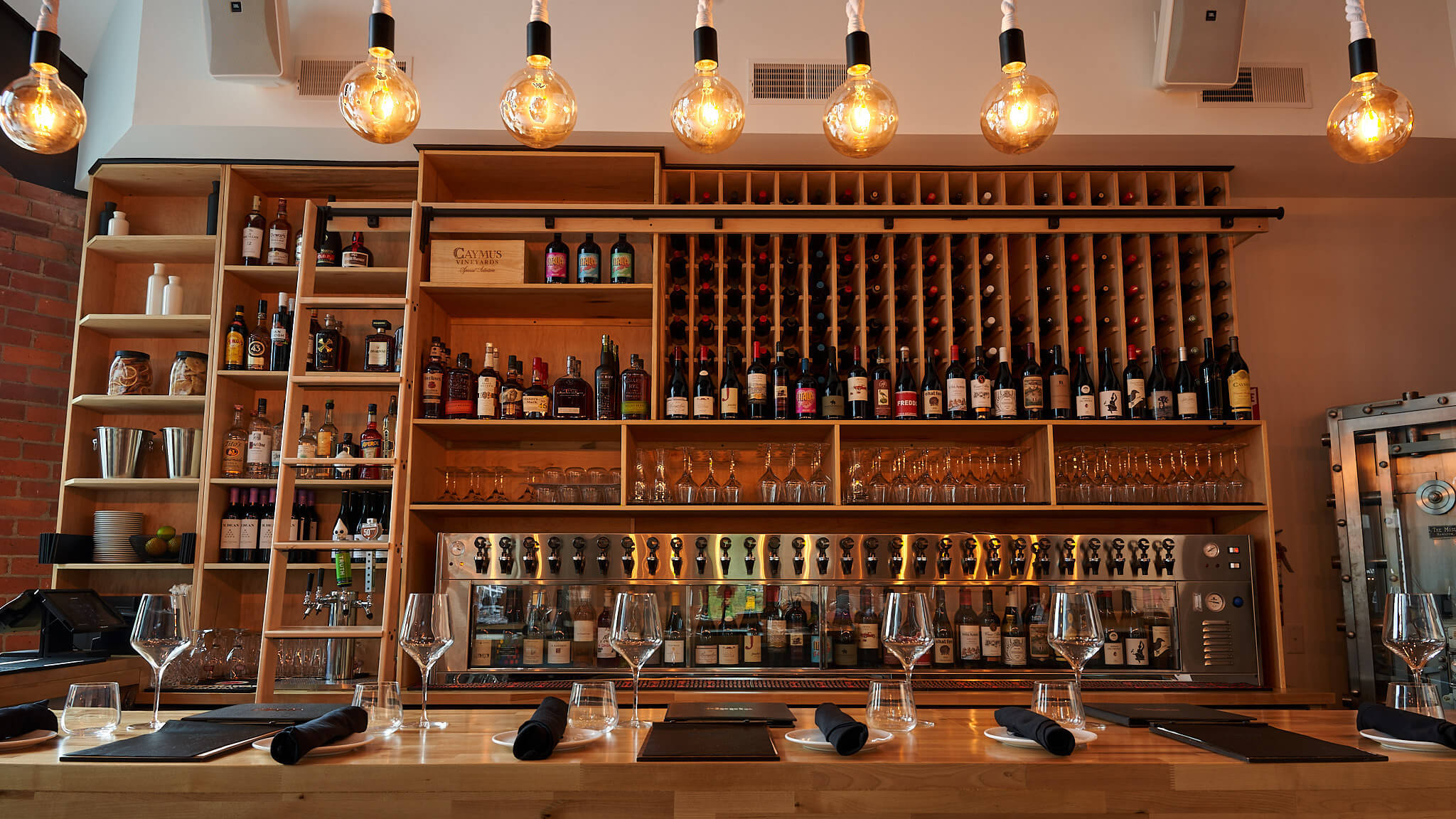
Las Vegas has quietly become one of the best cities in the country to open a wine bar. The tourism traffic is obvious, but there is a growing local market too — Henderson, Summerlin, and the Arts District have all seen a surge in demand for intimate, wine-focused concepts that are not casinos and not nightclubs.
The licensing process is also more accessible than most people realize. Unlike cities like New York or San Francisco where liquor licenses are capped and can cost six figures to acquire, Nevada issues new licenses. There is no artificial limit on the number of alcohol licenses in the state, which makes entry significantly more affordable.
But “more accessible” does not mean simple. Opening a wine bar in Las Vegas still requires coordination across multiple government agencies at the state, county, and city level, and the rules change depending on exactly where your space is located, what you plan to serve, and whether you offer food.
This guide walks through every license, permit, and cost involved in opening a wine bar in Las Vegas, Henderson, or anywhere in the Las Vegas metro in 2026.
This is where most new owners get confused, so let’s clear it up. The license type you need depends on two factors: what you plan to serve and where you are located.
If your concept is a true wine bar — wine, beer, and coolers only, no hard liquor or cocktails — you need a Beer & Wine On-Premise License. This is the most common and cost-effective license for a wine bar. In the City of Las Vegas, the application fee is $5,000 and the semi-annual license fee is $700. Each additional bar station costs $400 semi-annually.
This license allows you to sell beer, wine, and coolers for consumption on your premises. It covers wine by the glass, wine flights, bottles for on-premise consumption, and beer. It does not cover spirits, cocktails, or mixed drinks.
If you want to serve cocktails alongside your wine program — a wine-forward bar that also offers an Aperol spritz, a Negroni, or a curated spirits list — you will need a Full Liquor On-Premise License, also called a tavern license. The application fee is the same $5,000, but the semi-annual license fee jumps to $1,200 or more. Additional bar stations cost $900 semi-annually.
Many wine bar owners opt for this license even if spirits are not the focus, because it gives them full flexibility to evolve their menu without needing to reapply.
Want to let customers buy bottles to take home? You will need to add a Beer & Wine Off-Premise License ($5,000 application, $500 semi-annual) or structure your concept as a hybrid retail/bar operation. Some wine bars in Las Vegas operate as wine shops with a tasting bar, which requires both on-premise and off-premise licensing.
Here is something most guides skip entirely. In the City of Las Vegas, a tavern or bar with a full liquor license is typically required to serve meals during all hours the bar is open, maintain a permanent physical bar, have a minimum of 100 dining room seats away from the bar, and ensure that food accounts for 55% of gross sales.
But in the 18b Arts District, the rules are significantly relaxed. Establishments in the Arts District only need an on-premise kitchen for 12 or more hours per day (rather than all operating hours), only need 25 dining room seats (instead of 100), and the 55% food sales requirement does not apply.
This makes the Arts District one of the most attractive locations in Las Vegas for a wine bar concept. You can operate a genuinely wine-focused business without being forced to run a full restaurant operation to maintain your license.
A wine bar in Las Vegas requires approvals from multiple agencies. Here is the complete list.
Every business in Nevada needs an active state business license from the Secretary of State. The initial filing fee is $200, with a $200 annual renewal. File through the SilverFlume portal at nvsilverflume.gov.
Most wine bar owners form an LLC. Filing Articles of Organization costs $75, plus $150 for the initial list of managers/members. A registered agent is required and typically runs $100 to $300 per year.
Nevada operates a dual-licensing system for alcohol. In addition to your local retail license, you must register with the Nevada Department of Taxation. This registration ensures you are properly set up to handle alcohol excise tax obligations. There is no separate fee for the registration itself, but you will need to post a Tobacco/Alcohol Tax Bond — the amount is set by the Department based on your estimated volume of sales.
This is your primary retail alcohol license and the most significant one. It is issued by your local jurisdiction:
All alcohol licenses in Nevada are considered licenses of privilege, meaning every applicant undergoes a thorough background investigation. If you have not lived in the area for the past two years, you will also need to provide a police clearance letter from your previous place of residence.
Separate from the alcohol license, you need a general business license from your city or county. In the City of Las Vegas, fees start at $150 ($100 license fee + $50 processing fee) for food service concepts with fewer than 30 seats, and scale up based on gross revenue. These are billed semi-annually.
Before signing a lease, confirm that your location is properly zoned for on-premise alcohol sales. Las Vegas and Clark County both enforce distance separation requirements — your wine bar cannot be located too close to schools, churches, or certain community facilities. In the City of Las Vegas, on-premise beer and wine establishments have specific zoning classifications under LVMC Title 19. Zoning verification fees are typically $25 to $50.
Your lease must also explicitly permit alcohol sales on the premises. This is a detail that catches some first-time owners off guard — not every commercial lease allows it.
If you serve any food — even a simple cheese and charcuterie board — you need a health permit from the Southern Nevada Health District (SNHD). A plan review is required for new establishments, and annual permit fees range from $200 to $600 depending on the scope of your food operation. Even bars with very limited food menus need this permit.
In Clark County, all employees who handle food — including bartenders, servers, and anyone who touches food, ice, beverages, utensils, or glassware — must obtain a Food Handler Safety Training Card from the SNHD. This requires passing a food safety exam at a local SNHD office. The cost is approximately $20 per person.
Every employee who serves, sells, or handles alcohol in Nevada must obtain a Techniques of Alcohol Management (TAM) Card. This is a training certification that covers responsible alcohol service, recognizing intoxication, checking IDs, and Nevada alcohol laws. TAM cards are valid for four years and cost approximately $15 to $30.
Employees working in establishments that serve alcohol in Clark County are typically required to obtain a Sheriff’s Work Card (also called a work permit) from the Las Vegas Metropolitan Police Department. This involves a background check and fingerprinting. Fees range from $50 to $100 depending on the card type.
Register with the Nevada Department of Taxation for a Seller’s Permit to collect and remit sales tax. There is no fee. The combined state and local sales tax rate in Clark County is 8.375%.
Exterior signage in Las Vegas requires a sign permit from the city or county. Fees and requirements vary based on sign type, size, and location.
| License / Permit | Initial Cost | Recurring Cost |
|---|---|---|
| Nevada State Business License | $200 | $200/year |
| LLC Formation (Articles + Initial List) | $225 | $150/year |
| Registered Agent | $100–$300 | $100–$300/year |
| Alcohol License Application Fee | $5,000 | N/A |
| Beer & Wine License Fee | $700 | $700 semi-annually |
| Full Liquor License Fee (if applicable) | $1,200+ | $1,200+ semi-annually |
| City/County Business License | $150–$500 | $150–$500 semi-annually |
| Health Permit (SNHD) | $200–$600 | $200–$600/year |
| Food Handler Cards (per employee) | ~$20 | Renewal varies |
| TAM Card (per employee) | $15–$30 | Every 4 years |
| Sheriff’s Work Card (per employee) | $50–$100 | Annual renewal |
| Seller’s Permit | Free | Free |
| Zoning Verification | $25–$50 | N/A |
| TOTAL (Owner, Beer & Wine) | $6,700–$7,800 | $2,200–$3,500/year |
These figures represent government licensing costs only and do not include physical startup expenses.
Licensing is the easy part financially. The real investment is in the physical space, wine inventory, and equipment.
Retail and restaurant space in the Las Vegas metro typically runs $1.50 to $4.00 per square foot per month, depending on location and foot traffic. A wine bar of 1,000 to 2,000 square feet will cost $1,500 to $8,000 per month in rent. Budget first month, last month, and a security deposit for $4,500 to $24,000 upfront.
Prime Arts District locations command higher rents but come with the regulatory advantages mentioned above. Henderson and Summerlin offer more suburban foot traffic with generally lower per-square-foot costs.
A wine bar requires a specific atmosphere. Budget for a permanent bar top, seating, lighting, acoustic treatment, shelving, wall finishes, and a wine storage or display area. Depending on whether you are taking over a previously built-out restaurant space or starting from a raw shell, expect to spend $15,000 to $60,000 or more on interior buildout.
Proper wine storage is non-negotiable. A commercial wine refrigeration system capable of holding 200 to 500 bottles at proper serving temperatures runs $3,000 to $15,000. If you plan to offer wines by the glass with a preservation system (Coravin, nitrogen-based, or similar), add another $1,000 to $5,000 for the dispensing equipment.
Initial wine inventory is a major expense and one of the most important decisions you will make. A curated wine bar carrying 80 to 150 labels across by-the-glass and bottle programs should budget $15,000 to $40,000 for the opening order. Quality matters — your wine list is your product, and a thin or poorly curated list will undermine the entire concept.
A modern POS system with inventory tracking, tab management, and reporting will cost $1,500 to $5,000 for hardware and setup, plus $50 to $200 per month in software fees. Budget separately for Wi-Fi infrastructure, a security camera system, and a sound system.
Quality stemware is essential for a wine bar. Budget $2,000 to $5,000 for an opening supply of wine glasses, decanters, polishing cloths, bar tools, service trays, and miscellaneous smallwares.
General liability insurance for a bar serving alcohol in Nevada typically costs $2,000 to $5,000 per year. Liquor liability insurance is a separate policy and is strongly recommended (some landlords and jurisdictions require it). Combined, expect $3,000 to $7,000 annually.
Budget for consultant or attorney fees for licensing, an accountant for entity setup, initial marketing and branding, a basic website, and three to six months of operating capital as a buffer. A realistic miscellaneous budget is $5,000 to $15,000.
| Category | Estimated Range |
|---|---|
| Government Licenses & Permits | $6,700–$7,800 |
| Lease (First/Last/Deposit) | $4,500–$24,000 |
| Buildout & Interior | $15,000–$60,000 |
| Wine Storage & Refrigeration | $3,000–$15,000 |
| Opening Wine Inventory | $15,000–$40,000 |
| POS & Technology | $3,000–$7,000 |
| Glassware & Smallwares | $2,000–$5,000 |
| Insurance (First Year) | $3,000–$7,000 |
| Professional Services & Misc. | $5,000–$15,000 |
| TOTAL ESTIMATED STARTUP | $57,200–$180,800 |
A lean wine bar in a previously built-out space can open for under $75,000. A premium concept in a prime Arts District or Henderson location with a full buildout and deep wine program can push well past $150,000.
Here is the order of operations that keeps you on the fastest path and avoids the most common delays.
Step 1: Form your business entity. File your LLC or corporation with the Nevada Secretary of State and obtain your state business license. This needs to be done before you can apply for any alcohol license. Appoint a registered agent.
Step 2: Define your concept and license type. Decide whether you need beer and wine only or full liquor. This decision affects your application, your costs, and your food service obligations. If you are in the Arts District, understand the specific exemptions available to you.
Step 3: Find your location and verify zoning. Before signing a lease, confirm with the city or county that your proposed location is zoned for on-premise alcohol sales and meets all distance separation requirements. Verify that your lease explicitly permits alcohol sales.
Step 4: Apply for your alcohol license. Submit your application to the appropriate local jurisdiction (City of Las Vegas, Clark County, Henderson, or North Las Vegas). This triggers the background investigation, which is the longest part of the process — typically 30 to 90 days depending on the jurisdiction and your personal history.
Step 5: Register with the Nevada Department of Taxation. Complete your state-level alcohol registration and set up your seller’s permit for sales tax collection.
Step 6: Apply for your health permit. Submit plans to the Southern Nevada Health District for review. This is required if you will serve any food, even pre-packaged items.
Step 7: Build out your space. While your applications are being processed, begin your interior buildout, order your wine storage and refrigeration systems, and set up your POS. Do not start serving alcohol before your license is approved and physically posted at the location.
Step 8: Hire and certify staff. All employees need Food Handler Cards (if handling food), TAM Cards, and Sheriff’s Work Cards before they start work.
Step 9: Pass inspections. The health department, fire department, and building department will each need to sign off before you open. Schedule inspections as your buildout nears completion.
Step 10: Open. Once your alcohol license is approved and posted, your health permit is issued, and your inspections are cleared, you can legally open.
From entity formation to opening day, most wine bar owners should plan for 8 to 16 weeks. The biggest variable is the alcohol license background investigation, which can take 30 to 90 days depending on the jurisdiction, the complexity of your ownership structure, and whether you have lived in the area for the past two years.
Delays are most commonly caused by incomplete applications, lease issues (the landlord did not authorize alcohol sales, or the space is not properly zoned), missing financial documentation, or background check complications from prior residences.
Working with a licensing consultant who knows the local process can significantly reduce this timeline by ensuring your applications are complete and correctly submitted the first time.
1. Assuming beer and wine only means less paperwork. A beer and wine license has a lower fee than full liquor, but the application process, background check, and zoning requirements are identical. Do not underestimate the paperwork involved.
2. Signing a lease before checking zoning and landlord authorization. If the space is not zoned for alcohol or your lease does not explicitly permit alcohol sales, you cannot get licensed there. Period. Verify both before you commit money to a space.
3. Not understanding the food sales requirement (and the Arts District exception). Outside the Arts District, full liquor license holders must generate 55% of gross sales from food. If your concept is wine-forward with a small cheese board menu, this ratio can be difficult to hit. Choosing the right license type and location is critical.
4. Forgetting about employee cards. Every employee who touches alcohol or food needs certifications. TAM Cards, Food Handler Cards, and Sheriff’s Work Cards all take time and cost money. Factor this into your hiring timeline and budget.
5. Underestimating wine inventory costs. Your wine list is your entire product. A wine bar that opens with 30 mediocre labels is not a wine bar — it is a bar that happens to serve wine. Budget properly for a curated opening inventory that reflects your concept and attracts your target customer.
Silent G Consulting is a full-service business licensing firm based in Las Vegas with over 30 years of combined experience helping Nevada entrepreneurs get set up, licensed, and open. We handle LLC formation, liquor licensing, city and county business licenses, zoning verification, and every other permit your wine bar needs.
Already know what you need? Read our complete Las Vegas Liquor License Guide for a deep dive into the application process, or our Nevada Liquor License Guide for statewide licensing details.
Schedule a free consultation: silentgconsulting.com/contact-us
Call us directly: (702) 587-5652
Disclaimer: This article is for informational purposes only and does not constitute legal or financial advice. Licensing requirements, fees, and regulations are subject to change. Always verify current requirements with the appropriate government agencies or consult a licensed professional.